
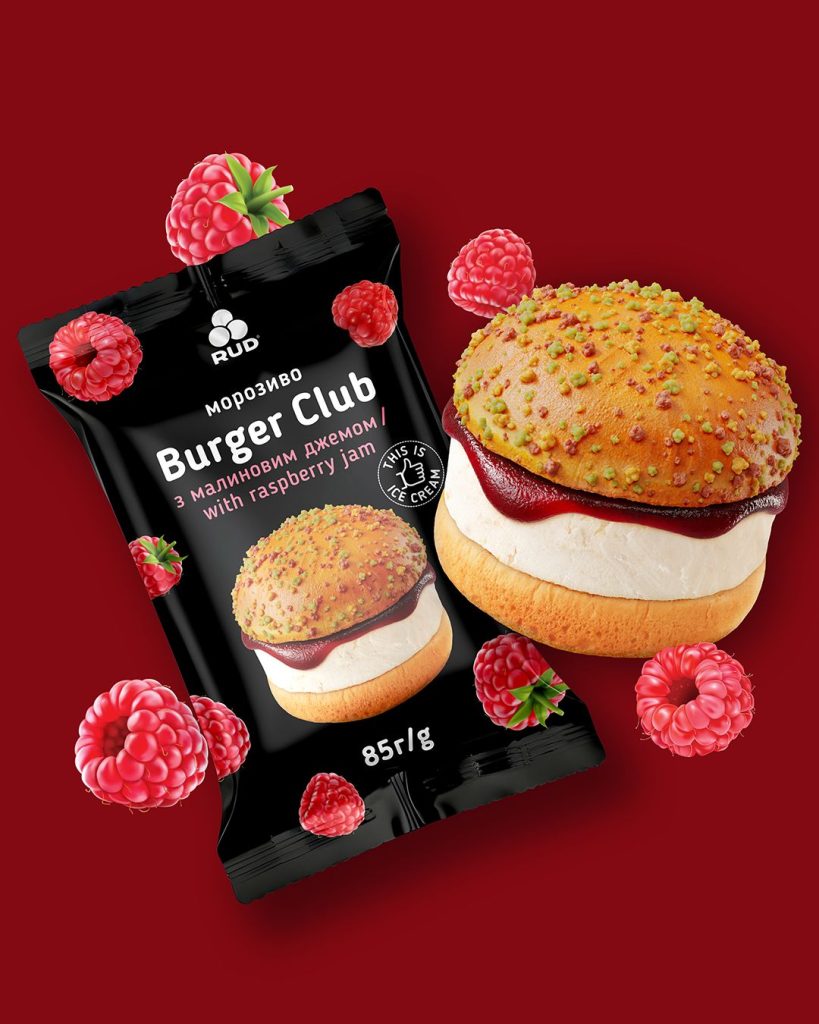
Product packaging design: Burger ice cream case study by the “Rud” company
Burger-shaped ice cream – when the packaging supports the product’s character.
In product design, there is a category of ideas that look very bold in a presentation but start causing problems in real retail. The Burger ice cream by “Rud” belongs to exactly this kind of case. The shape of a burger automatically triggers associations with fast food, savory taste, sauces, and a meat patty in the buyer’s head. But inside, the person gets a dessert with ice cream and raspberry jam.
This is where the most interesting part begins for the packaging team. It was necessary not just to make a bright design, but to build the right reaction even before the first bite. If the packaging goes too heavily into burger aesthetics, the buyer’s brain will tune into a completely different taste scenario. On the other hand, if you focus only on the dessert aspect, the product will lose its main feature and turn into just another ice cream among dozens of competitors.
For such launches, a regular “pretty design” is not enough. Here, the packaging essentially acts as the first advertisement for the product right in the freezer display.
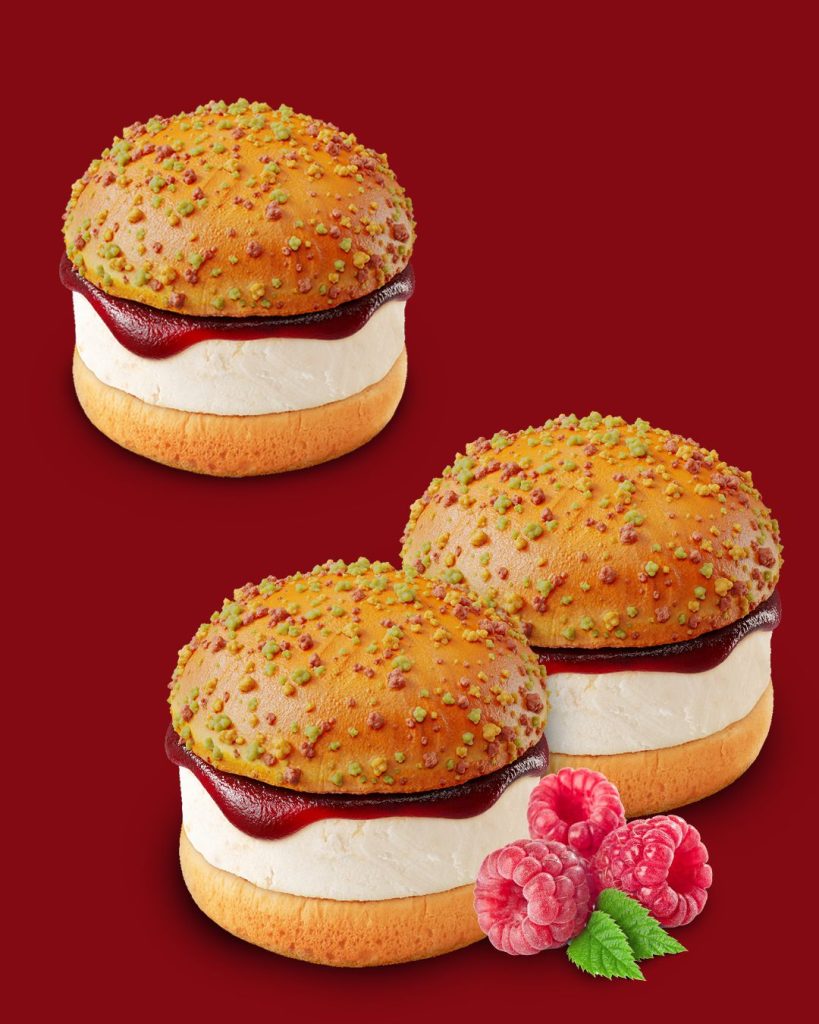
In the freezer, design rules become stricter
On a laptop screen, many things look neat and expensive. Minimalism, delicate colors, clean compositions, restrained premium. Then the layout gets into the store’s freezer, where it is surrounded by acid-colored price tags, colorful promotional stickers, and dozens of packages shouting at each other with colors.
At this point, half of the “aesthetic” concepts simply die.
During the work on Burger, we had to abandon several very beautiful options exactly because of this. In the office, they looked stylish. In the display case, the product became unnoticeable. Especially under cold light, which quickly removes the softness of colors and makes a weak contrast even weaker.
In food retail, design constantly goes through a reality crash test. What works well on a presentation slide does not always survive contact with the store.
The product photo works almost like an advertising poster here
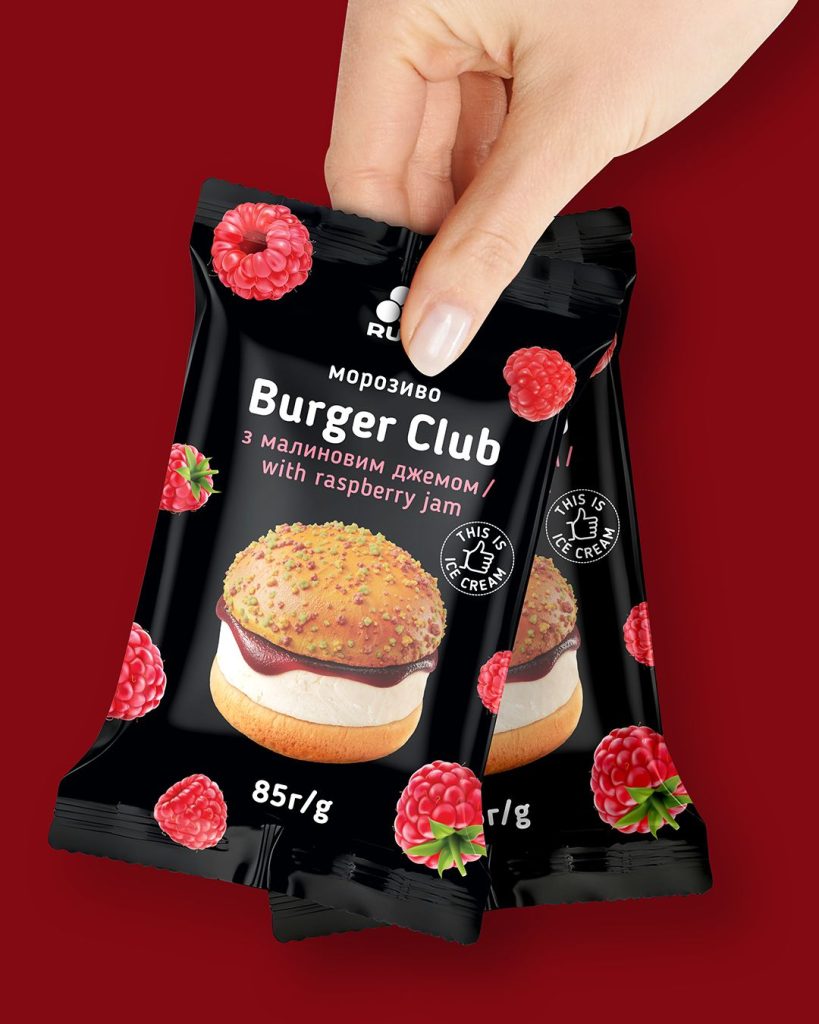
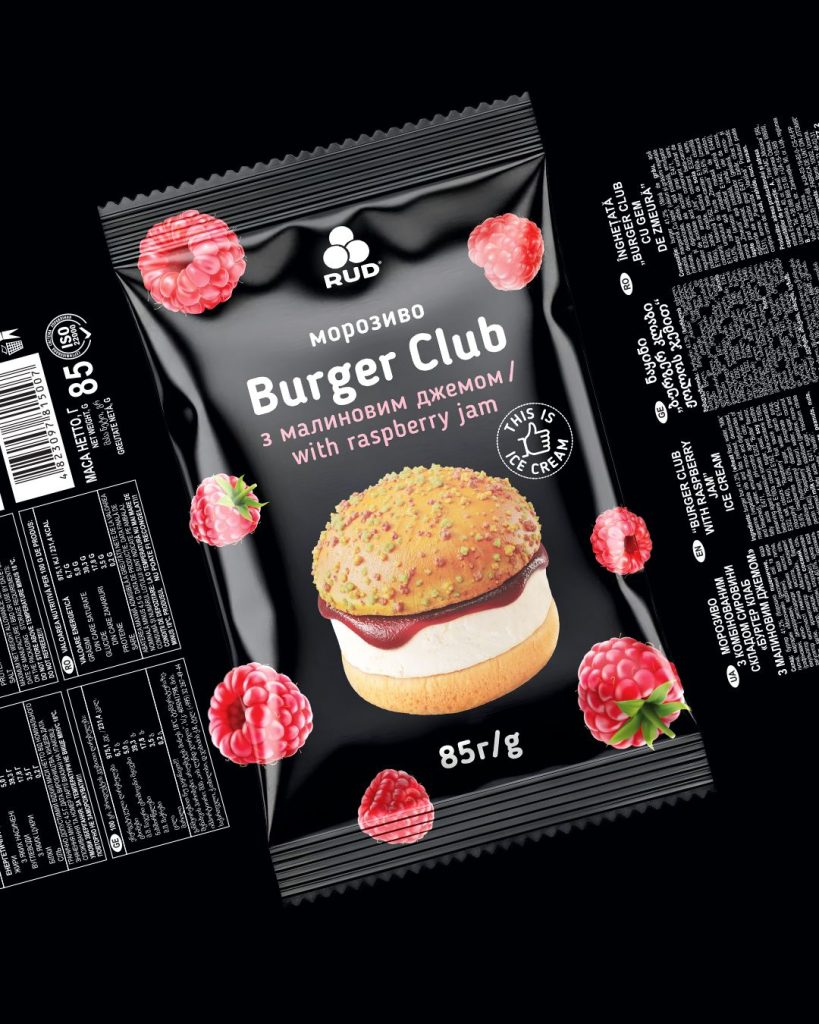
In the case of Burger, the image of the ice cream itself became the central element of the packaging. Not a decorative background, not graphic elements, and not abstract stylization. A person must literally see in a second that in front of them is a dessert, not a joke souvenir or a weird collaboration.
Therefore, the large product photo received a very clear task. To show the structure, texture, raspberry jam, ice cream layers, and at the same time keep the recognizable shape of a burger. All this works as a quick visual decoding.
Interestingly, in such products, people often buy not only the taste. They buy an emotion that can later be retold to someone. Someone photographs the packaging for stories, someone brings it home saying “look what a weird ice cream I found,” and someone buys the product simply out of a desire to get a new experience.
For FMCG, this is a very strong mechanism, but it only works when the packaging supports the character of the product, rather than trying to smooth it out.
The most dangerous phrase in agency work sounds very innocent!
At a certain point in almost every bold project, familiar conversations begin. The client looks at a bright concept and starts worrying if it turned out “too much.”
Usually, at this point, they ask to make it a bit calmer, remove some accents, or tone down the colors. The logic is understandable. The business is afraid that a non-standard design will alienate part of the audience.
The problem is that caution very often kills the very essence of an innovative product. Especially in impulse purchase categories. If a burger-shaped ice cream looks too “neat” and restrained, the buyer simply won’t notice a reason to pay attention to it.
This is the difficulty of working with non-standard products. The design must remain controlled, but not cowardly. Otherwise, the brand single-handedly removes the main emotion for which it created the novelty.
Packaging design development for weird products is always associated with risk.
There are categories where the buyer behaves very rationally. For example, household chemicals or pharmacy goods. Ice cream lives by different rules. Here, decisions are often made emotionally and very quickly.
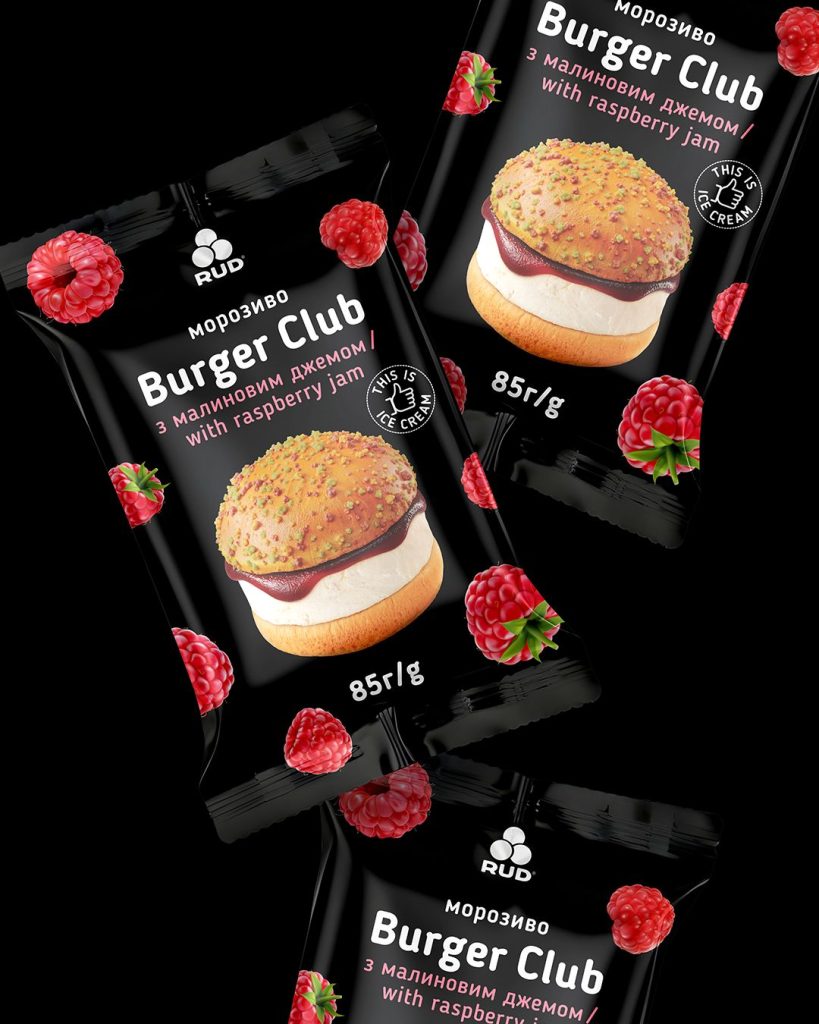
That is why packaging design development for such launches is built around human reaction, and not just around graphics. You need to understand how the product will look in the freezer display, whether it will be noticeable in delivery photos, or if it won’t get lost on TikTok or Instagram among other novelties.
In Burger, the packaging works as a continuation of the product idea itself. It doesn’t try to look “more serious” than the dessert itself. And this is the right decision for such a category.
Brands sometimes forget that people sense falsehood very well. If a product is built on playfulness and irony, and the design suddenly starts speaking the language of cold premium, a weird feeling of artificiality arises.
In product marketing, the first purchase and the second purchase live by different laws
An advertising campaign can create hype around any novelty. Especially when the product looks unusual. But the real test begins only after the first contact.
A person buys a product out of curiosity once. Then the packaging starts working on another task. It forms a sense of brand integrity and is responsible for whether the buyer will want to return to the product again.
In FMCG, this is very noticeable. Some novelties launch loudly, gather reactions on social media, and after a few months simply disappear. Not because the product was bad. It’s just that after the first wave of emotions, the brand failed to anchor itself in the buyer’s head.
Burger was built a little differently. The packaging here does not live separately from the product. It supports the very mechanics of the idea and helps the ice cream remain recognizable even after the “wow, a burger-shaped ice cream” effect ceases to be news.
Why does packaging often sell faster than taste in retail?
People love to say that quality is the main thing in a product. In a real store, everything is more complicated. First, a person sees the packaging, and only then decides whether they even want to find out about the taste.
This is especially true for new products that break familiar categories. Here, the design does not just decorate the goods. It explains exactly what lies in front of the buyer right now.
That is why the request to order packaging design usually arises not when a company “wants to update the label.” Most often, a business already sees that the product cannot withstand competition on the shelf or cannot properly convey its idea in the short time of contact.
The Burger case study for “Rud” clearly shows one simple thing. Sometimes the hardest part of launching a new product is not coming up with an unusual shape. It is much harder to make this shape sell itself without additional explanations.

