
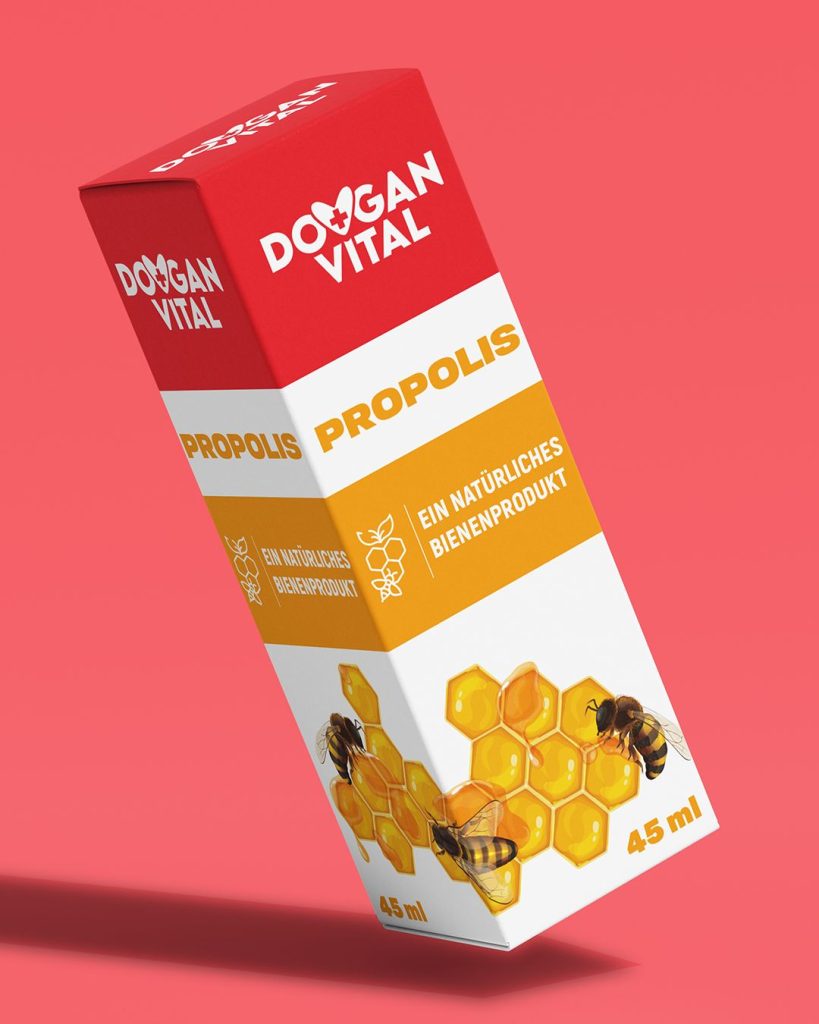
Product packaging design: DOGAN VITAL packaging must work from a distance of several meters.
A strange trap has emerged in the natural products category in recent years. Brands tried so hard to look “ecologically correct” that they gradually lost their own distinctions. The shelf filled up with identical jars featuring leaves, craft textures, and calm green colors. It looks neat in a presentation. In a real pharmacy, everything blends into one soft blur, where it is hard to recall even a single specific product.
For DOGAN VITAL, the situation demanded a different approach right from the start. The line was created for the German market, where people are used to quickly evaluating not only the naturalness of a product but also the level of control, systemization, and trust in the brand. That is why the visual system was not built around a typical “eco mood.”
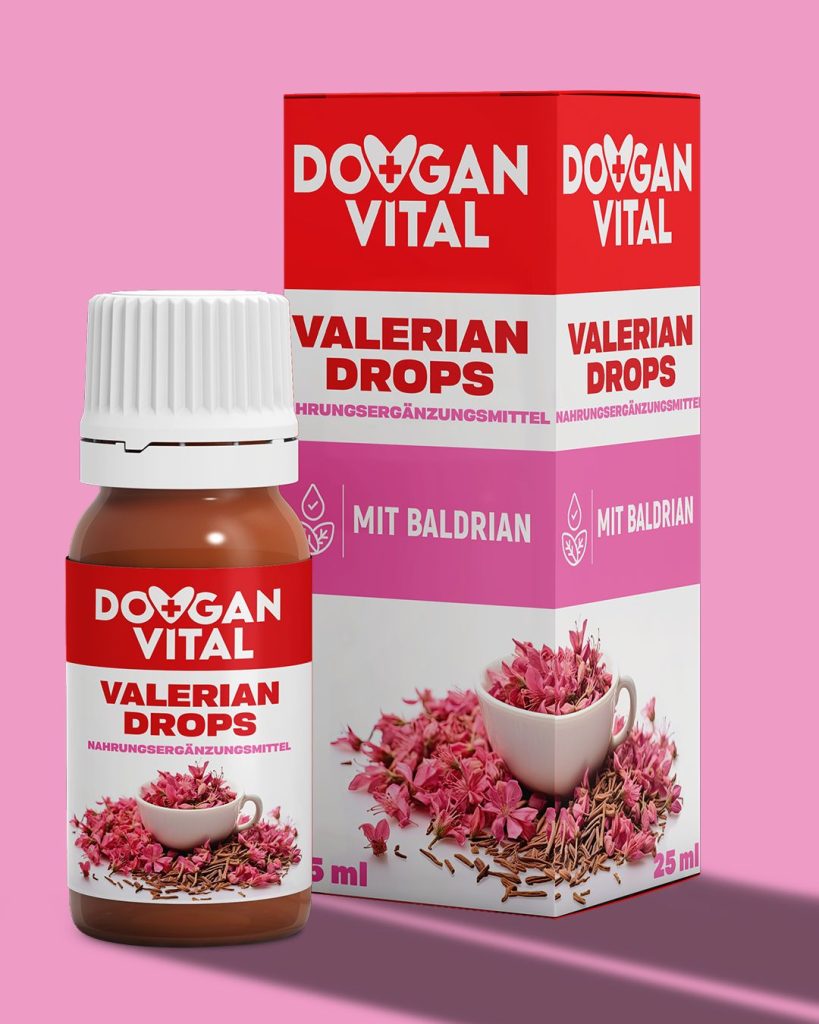
A red brand block became the central point of the entire packaging architecture. Not out of a desire to do something aggressive or loud. It’s just that in real retail, packaging must work from a distance of several meters, under the cold light of pharmacy shelves, and right next to dozens of competitors who are also talking about naturalness.
Under such conditions, a neutral design very quickly becomes invisible.
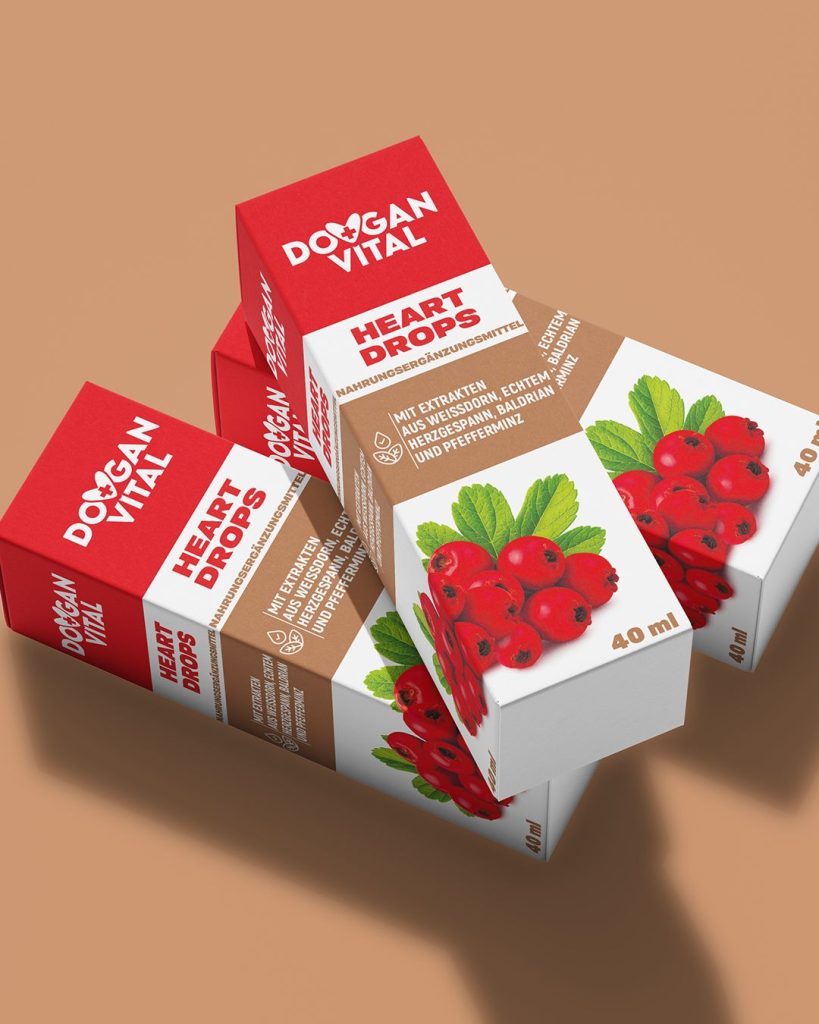
Naturalness without a homemade feel
When working with the wellness segment, there is one problem that is rarely talked about in beautiful brand presentations. Some manufacturers get so carried away with a “homemade” style that the product starts to look not natural, but cheap.
For local farmers’ markets, this sometimes works. For large pharmacy chains in Germany, the situation is different. A person wants to see natural ingredients, but at the same time expects structure, clear navigation, and a sense of control. Especially when it comes to health products.
That is why in DOGAN VITAL, botanical elements remained part of the system, rather than its main idea. They support the natural character of the brand, but do not turn the packaging into a “jar of herbs.” The entire composition is built quite strictly, with a clear grid and a stable logic for the placement of elements.
This is a minor detail only at first glance. In reality, the buyer reads such things very quickly on a subconscious level. Especially in a category where trust in the brand directly affects sales.
When does a good product visually lose to a weaker competitor?
In the process of launching wellness products, the exact same story almost always occurs. A business works for years on the formula, testing, certification, and production. But at the moment of entering the market, it suddenly becomes noticeable that the buyer pays attention to something entirely different.
First, a person sees the packaging. Only then the composition, characteristics, or ingredients.
Because of this, even a strong product can lose to brands with a mediocre composition but better positioning. Especially in pharmacies, where decisions are often made very quickly.
One wellness brand owner once joked rather nervously during a redesign that his product “looks too modest for its price.” The phrasing is rough, but you can clearly hear a real market problem in it. People don’t always have time to appreciate the quality of a product if the visual presentation doesn’t inspire trust at the very first contact.
Exactly at this moment, a business usually starts thinking not just about a new label, but about packaging design development as a positioning tool.
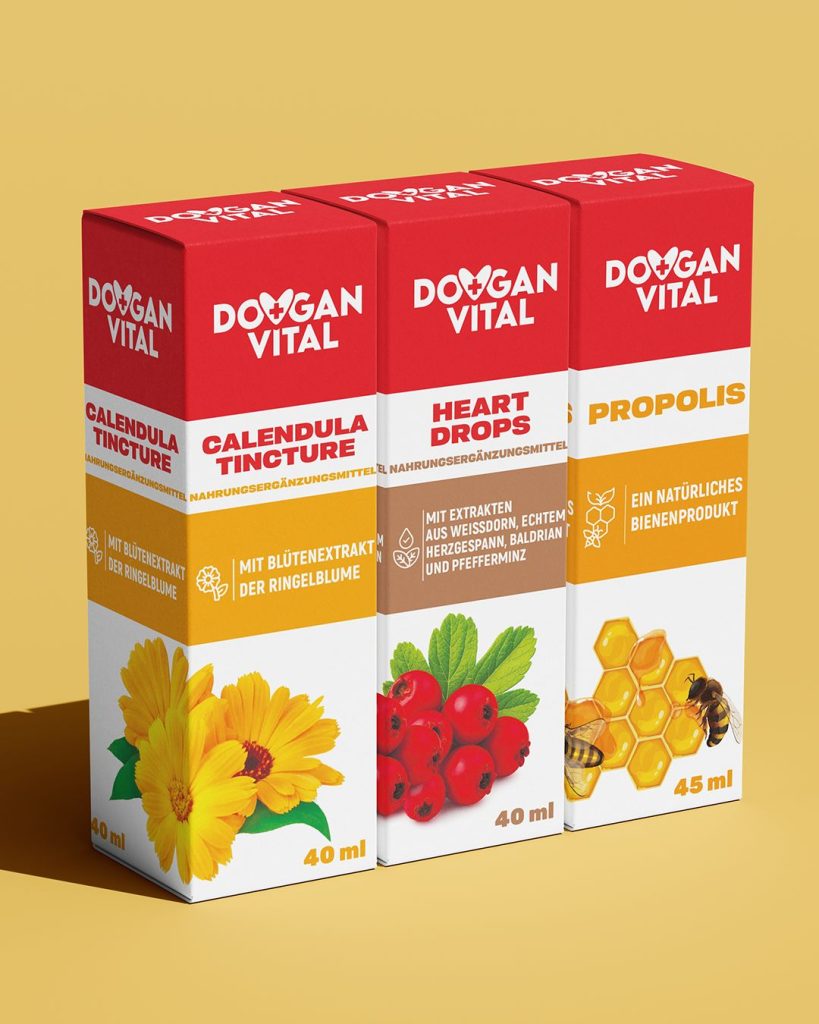
The biggest problems begin after the third SKU
A single package almost always looks convincing. The real difficulties appear later, when the brand begins to expand the line.
First, an immunity product is added. Then magnesium. Next, a sleep series, new complexes, or individual vitamins. If the system was not thought out in advance, a year later the shelf turns into a weird construction set made of different fonts, random colors, and “temporary solutions” that no one even remembers approving.
Such stories happen constantly in agency work. Moreover, the problem is rarely related to bad designers. More often, the brand simply grows faster than a proper visual architecture is formed.
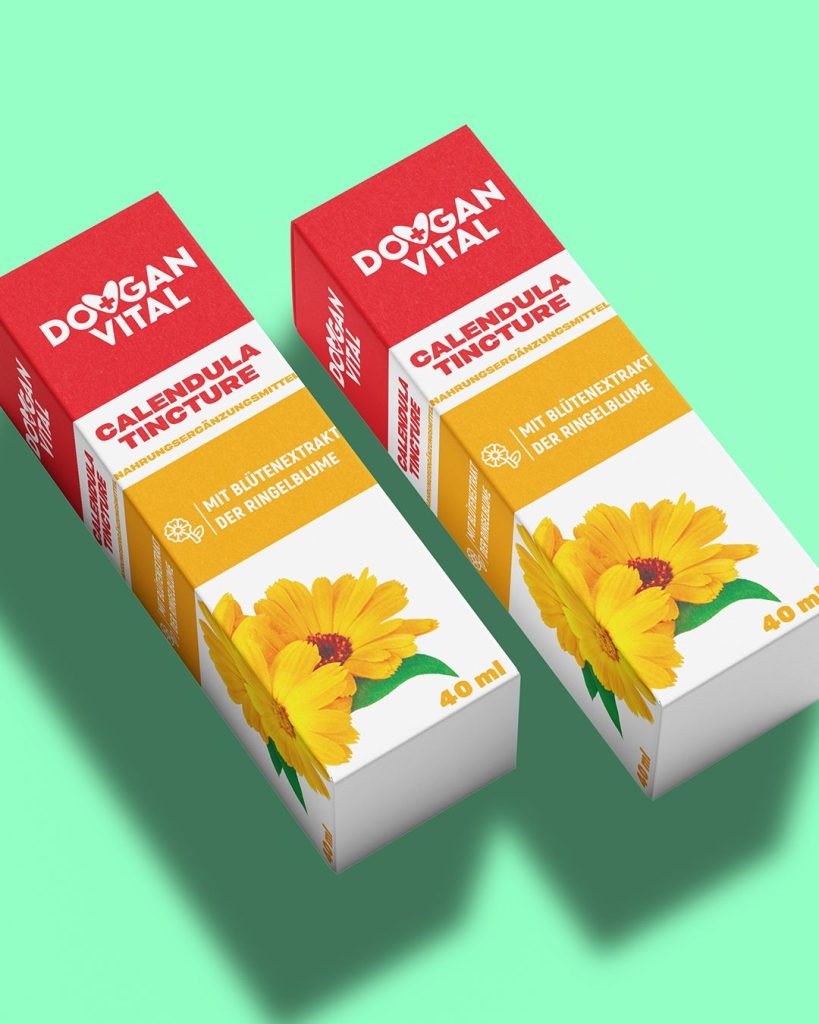
In DOGAN VITAL, the system was built right away with scaling in mind. The red block maintains recognizability, color coding helps quickly distinguish products, and the entire structure allows for adding new SKUs without creating a sense of chaos on the shelf.
And here you can clearly see the difference between a single “beautiful layout” and a well-thought-out brand system. Because when the assortment grows to dozens of items, a random design starts to break down literally before your eyes.
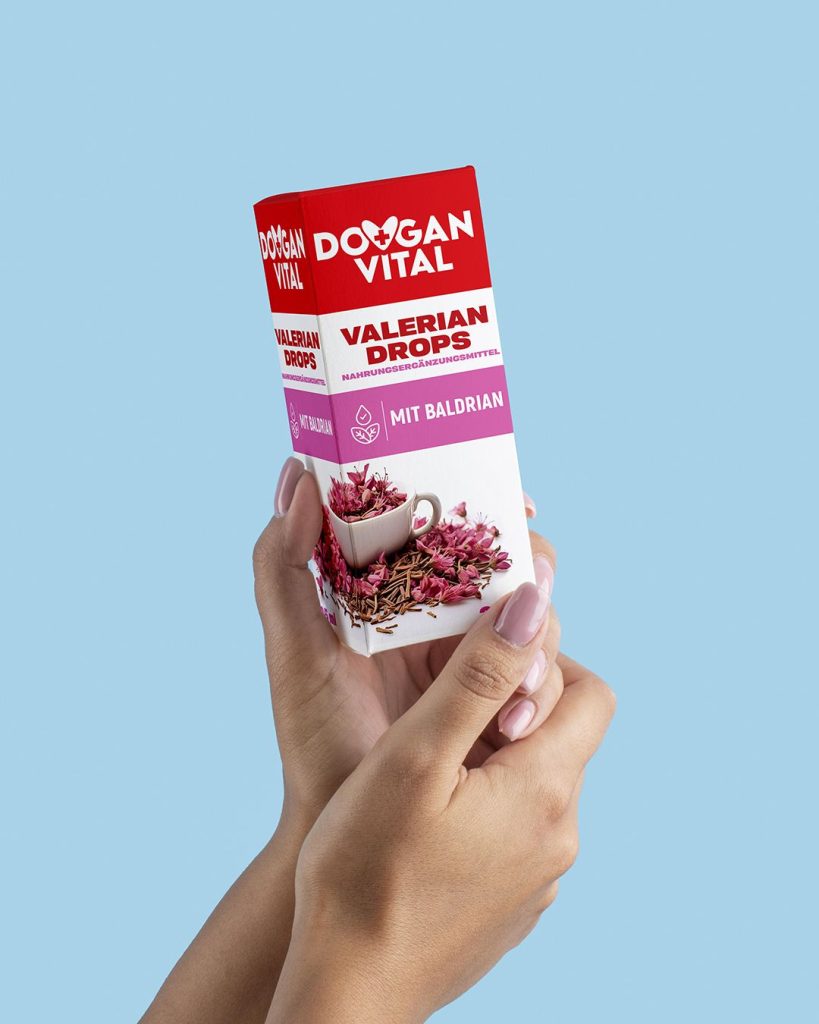
What looks good on a screen doesn’t always work in a pharmacy!
This is another thing that business owners notice only after printing the first batch.
On a laptop screen, the design might look premium, neat, and very “clean.” In a store, the situation changes. The cold lighting in pharmacies washes out some of the colors, small elements lose contrast, and certain shades start to look cheaper than planned.
Because of this, some packages that worked well in a presentation literally dissolve among competitors in real retail.
During the creation of DOGAN VITAL, great attention was paid specifically to the packaging’s behavior in a real environment. Not in mockup files, not in beautiful renders for a portfolio, but on the shelf, where the buyer sees the product for a few seconds and simultaneously looks at twenty other jars nearby.
Under such conditions, minor details almost don’t exist. Even the distance between text blocks or color saturation begins to influence whether a person’s gaze lingers on the product.
Why does packaging in Germany also sell a sense of order?
For the German market, the topic of health is very closely tied to a systematic approach. People pay attention to structure, clear navigation, neatness, and logic in the details. That is exactly why an overly “emotional” design in the wellness category sometimes works worse here than more restrained solutions.
Interestingly, many brands try to compensate for weak positioning with a large amount of visual noise. They add new icons, complex backgrounds, unnecessary decorative elements, and photos of ingredients. As a result, the packaging starts screaming about everything at once.
At this moment, the buyer simply stops understanding where to look.
In DOGAN VITAL, the logic is built differently. The visual system does not overload a person with information. It quickly explains what kind of product it is, which line it belongs to, and why the brand looks stable.
Sometimes, this kind of structural clarity creates a premium feel stronger than complex graphics or expensive decorative techniques.
When does packaging design become a part of the business system?
Many companies still perceive packaging as a separate task for a designer. In reality, in the real FMCG and wellness market, it has long been working as part of the business model.
It determines how easily a brand scales, whether the line can expand properly, and how the product will look in pharmacies, marketplaces, and advertising materials simultaneously.
That is why the request to order packaging design usually appears not out of a desire to “update the label.” More often, a business already sees that the old system is failing to cope with brand growth or is losing visibility next to competitors.
In DOGAN VITAL, a different approach is clearly visible. Here, the packaging does not just try to be beautiful. It works as visual infrastructure for a brand that plans to grow further, add new products, and remain recognizable even when the assortment becomes several times larger.

