
Product packaging design: how controlled chaos sells ice cream.
When packaging works louder than advertising: why “67” ice cream is remembered at first sight!
Ice cream packaging has very little time to catch the buyer’s eye. A person opens the freezer, quickly scans dozens of labels, and almost immediately decides what to take. This is especially noticeable in the youth segment, where a purchase is often born not from a long selection process, but from an instant emotion.
That is why packaging design in such a category cannot be just “pretty.” There are enough pretty, bright, and sweet labels in the freezer. Fruits, cream, chocolate splashes, neat typography, a clean background, the promise of naturalness—all this can be done well, but on the shelf, it often blends into one familiar noise.
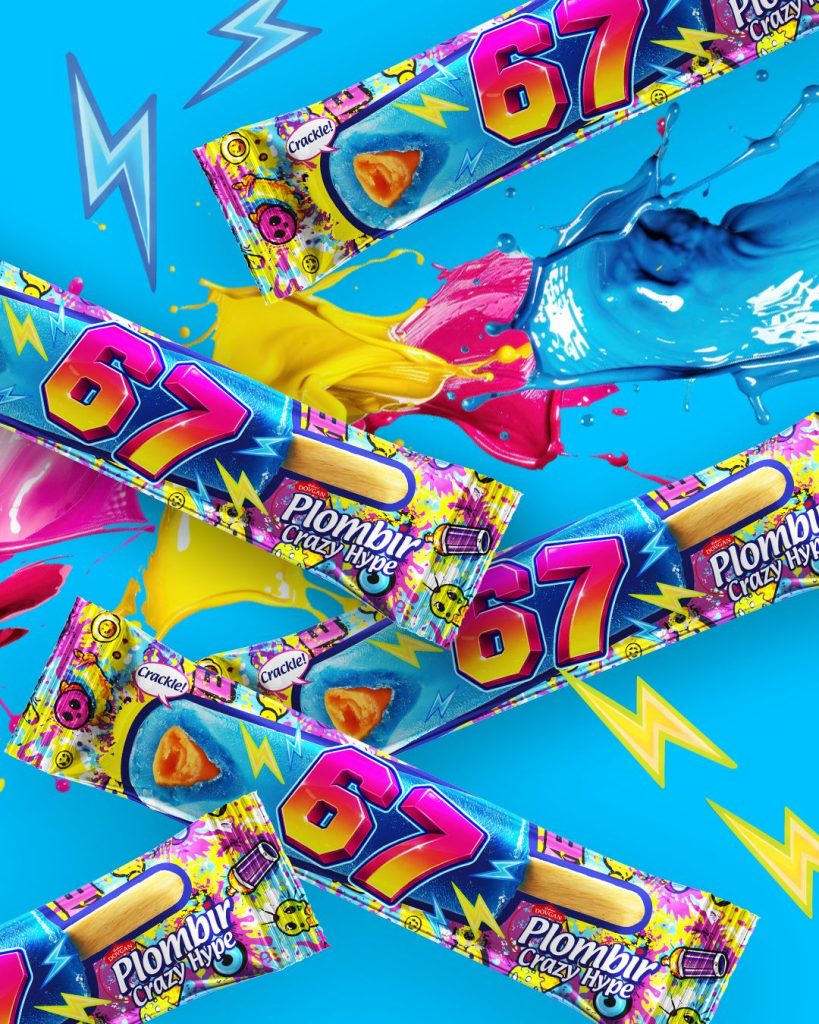
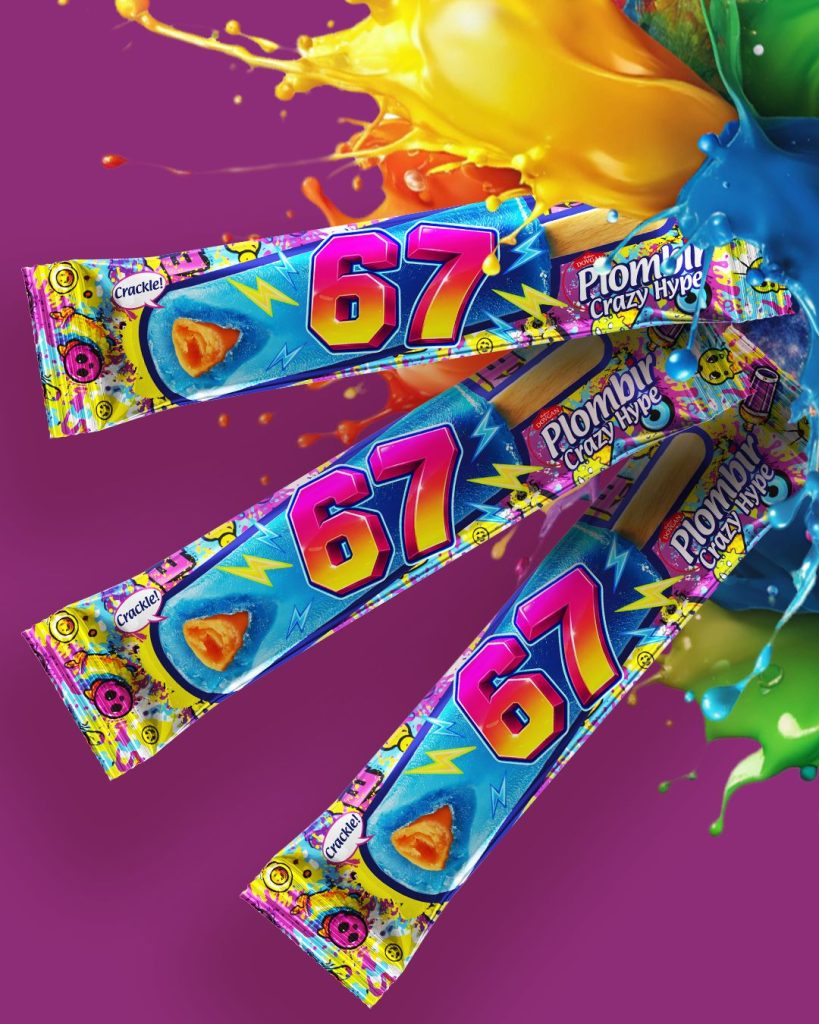
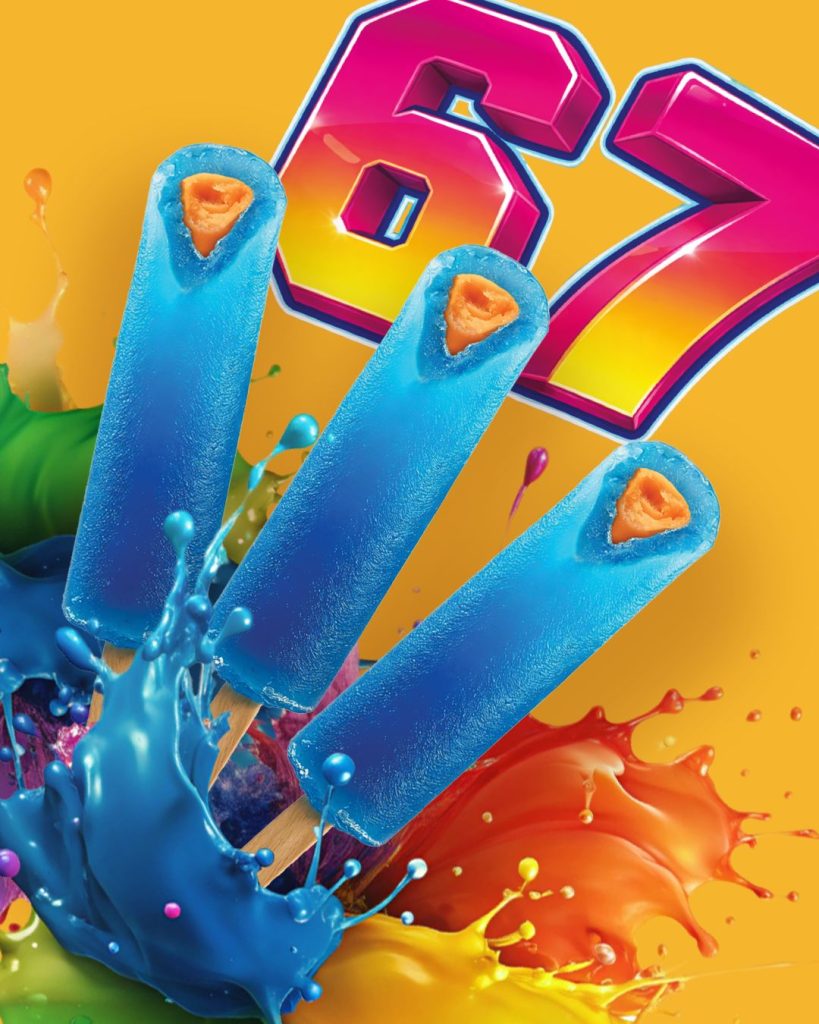
Against this background, the “67 Plombir Crazy Hype” ice cream, created by the brand based on the 67 meme, works differently. It doesn’t try to look calm, classic, or “tasty” in the usual sense. The packaging immediately stands out from the row: a large number 67, neon colors, graffiti, paint splatters, lightning bolts, comic book aesthetics, emojis, sharp contrast, and a feeling of controlled chaos.
At first glance, it seems like there is too much of everything. But that is exactly the idea. This design appeals not to all buyers at once, but to a specific audience—to teenagers and young adults who are used to TikTok, memes, stickers, short videos, bright avatars, and constant visual noise.
Such packaging does not compete with classic ice cream by the rules of classic ice cream. It speaks a different language.
Why “neat” design doesn’t always sell better?
When working on packaging, there is often a temptation to make the layout cleaner: remove unnecessary elements, align the composition, calm down the colors, add more negative space, and make everything a bit more “adult.” At a presentation, such an option might look more solid, especially if it is viewed separately, on a large screen, and without competitors nearby.
In the store, the situation is different. There, the packaging does not lie in the silence of a presentation slide. It fights for attention next to dozens of other products, under the cold light of the freezer, among price tags, glare, other people’s logos, and other people’s colors.
If a product is created for a young audience, excessive neatness can look artificial. A youth brand doesn’t necessarily have to be beautiful in the classic sense. Sometimes it is more important for it to be weird, edgy, a little cheeky, but recognizable.
In the case of “67,” it is clear that the design does not strive for universality. It bets on those who quickly read meme aesthetics, bright symbols, and a non-standard presentation. For some buyers, such packaging will be too loud. For its target audience, on the contrary, it looks organic.
This is an important point for a business planning to order packaging design for a youth product. The right decision is not always to make the layout calmer. Sometimes you have to honestly accept the character of the product and not smooth it out to a safe middle ground, because it is exactly this middle ground that gets lost on the shelf most often.
A local code instead of a standard slogan.
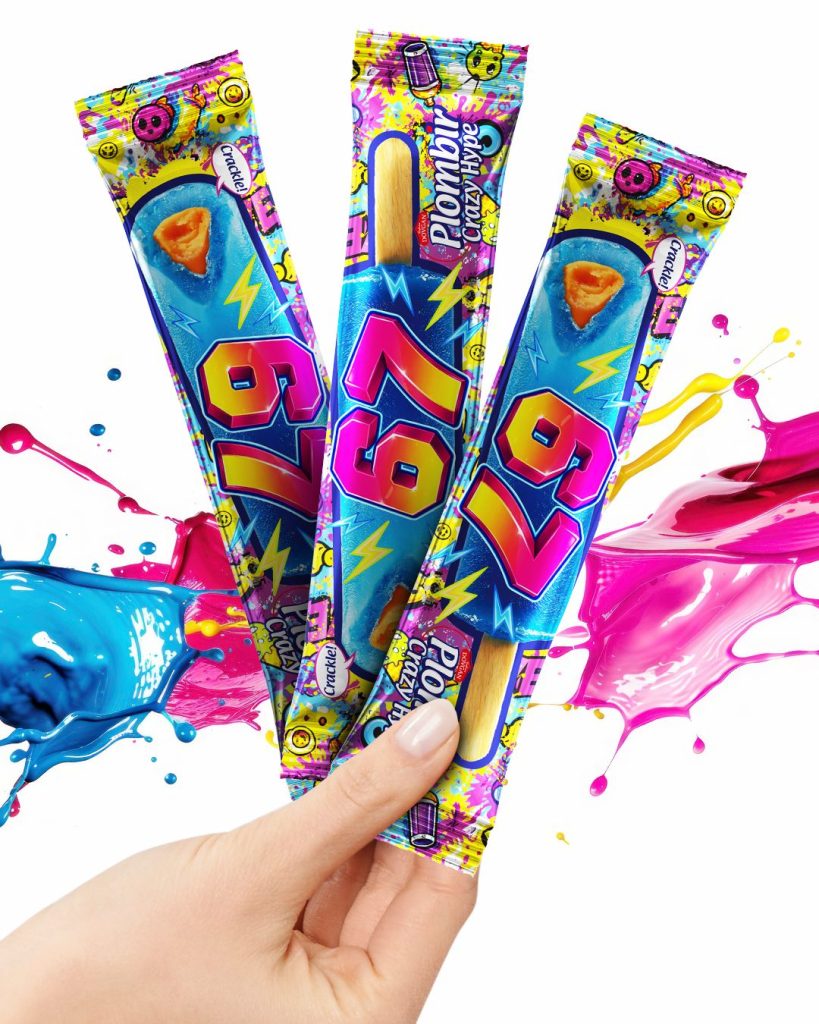
One of the strongest elements in this packaging is the large number 67. It doesn’t look like a random detail. It takes center stage and works as a sign, almost like a short password for its audience.
Numbers are easy to remember. They are easy to spot from afar, easy to repeat, easy to turn into an inside joke or a local symbol. If there is a meme or cultural context behind the number, it starts working stronger than an ordinary advertising phrase.
Many brands try to create a slogan that will be understood by everyone. But in youth products, it is sometimes more effective not to explain everything directly. It is better to give a sign that “insiders” will read faster than any message on the packaging.
In “67,” this technique is felt very well. The buyer might not yet know the taste, read the ingredients, or make out all the details, but they already catch the mood of the brand. On an impulse shelf, such speed of perception often decides more than a long text about the product’s benefits.
Packaging as part of the content.
A modern product often lives not only in the store. It has a chance to end up in stories, a short video, a photo in a messenger, or a joke among friends. For youth categories, this is no longer an added bonus, but a part of audience behavior.
The “67” ice cream looks like something you immediately want to show off. The neon blue color of the ice cream itself, the orange core, the acid graphics on the packaging, the large number, and the overall noisy aesthetic create a ready-made visual image. You don’t need complex props for a photo or video, because the product itself already looks like a small object for content.
This does not mean that every package has to be flashy. But if a brand focuses on digital promotion, it’s worth thinking not only about how the product looks on the shelf. It is important to imagine how it will look in a hand, in a vertical video, against the backdrop of a street, school, park, or urban space.
Restrained packaging can be very high-quality. It’s just that not every restrained design gives a person a reason to take out their phone.
Why blue ice cream isn’t a mistake here?
In classic food design, the product is usually shown as appetizing, warm, natural, and clear. Chocolate should look chocolaty, cream creamy, berries fresh. This is logical for many categories, especially where the brand sells trust, family values, or naturalness.
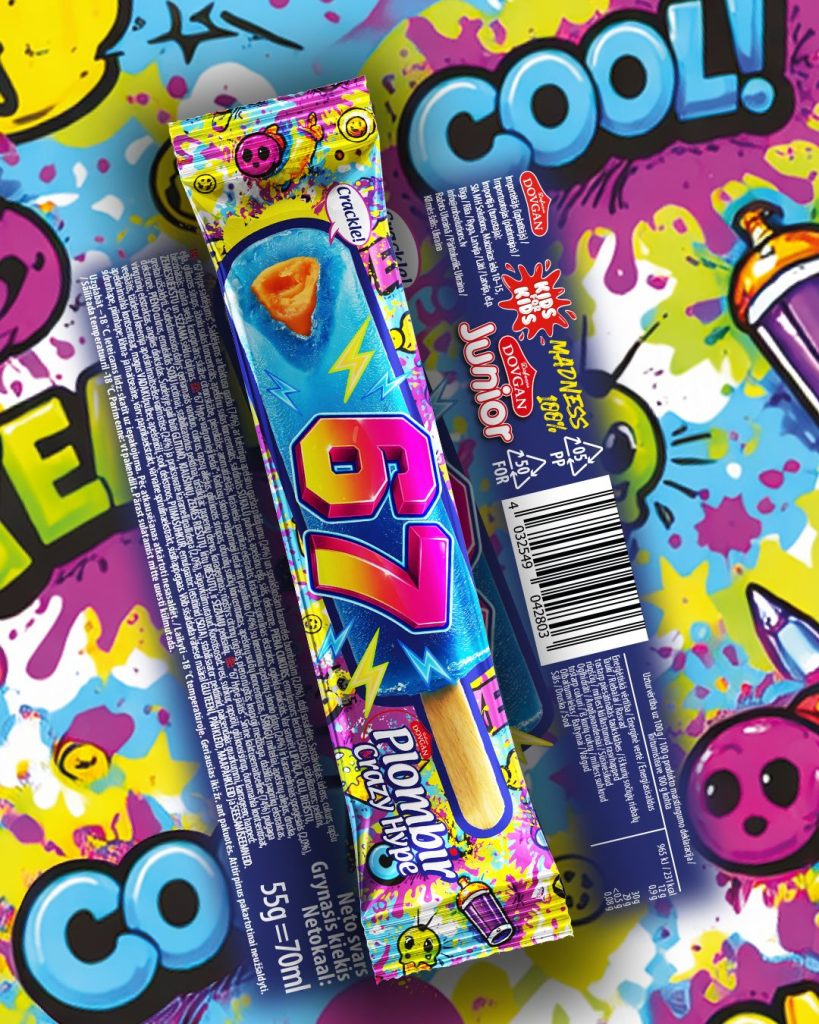
The “67” ice cream sells a different emotion. The blue glaze and orange filling work as part of the overall image. This is not just a dessert, but a quick experiment, a short sweet shock, a product with a sense of playfulness.
For an adult buyer, such a presentation might seem strange. But for a young audience, strangeness itself often becomes an advantage. It triggers a reaction: “Have you seen this?”, “What does it taste like?”, “Let’s try it.”
It would have been weak to make a loud, meme-like label, but put ordinary white ice cream without character inside. Here, the visual promise continues in the product itself, and therefore the concept does not fall apart after opening the packaging.
Controlled chaos, not a random mess.
Despite the impression of visual noise, the “67” packaging does not look randomly put together. It has a clear hierarchy: the large number 67 holds the main attention, then the eye moves to the product itself—blue ice cream with bright filling—while splashes, emojis, lightning bolts, graffiti, and comic book details create an atmosphere around it.
This is no minor detail. Real chaos in design quickly turns into a problem: the buyer does not understand where to look, the brand gets lost, the name is unreadable, the product is not remembered. In a good non-standard design, noise must be under control.
Therefore, ordering packaging design, especially for a complex or daring category, does not just mean asking to “make it bright.” Brightness without a system doesn’t sell; it only tires the eye. Professional design holds on a balance: attracting attention, not losing readability, creating character, and at the same time not turning the layout into a random set of effects.
The back of the packaging must also work!
The front of the packaging can sell an emotion. The back must smoothly pass the checkout, retail, and all technical requirements. There is no place for chaos for the sake of chaos there: the ingredients, nutritional value, weight, volume, storage conditions, barcode, and service information must be readable.
In good packaging design, these two tasks do not conflict. The front attracts attention, the back maintains trust and creates no problems in sales. If the technical blocks are laid out sloppily, even a strong concept starts to look unprofessional.
In “67,” it is visible that the emotional chaos was not mindlessly transferred to the entire package. A clear structure is left for the service information. This makes the design not just loud, but suitable for real retail, where packaging lives not in a portfolio, but in print, logistics, display, checkout, and the buyer’s hands.
Why are such concepts easily ruined by edits?
The most dangerous stage in such projects often begins after the first successful concept. The idea has already been found, but people start “improving” it: slightly reduce the contrast, remove the weird emoji, make the colors softer, add more clean space, calm down the font, broaden the audience.
Each edit individually might sound logical. Together, they are capable of stripping the packaging of its most important thing—its character.
In youth design, this is especially noticeable. When a brand tries to be bold but constantly holds itself back, the result often looks awkward rather than modern. Young people can feel perfectly well where the real energy is and where it is an adult’s attempt to imitate youthfulness.
Therefore, working on such packaging requires more than just creativity. You need the ability to defend the idea, explain the logic of the decision, and stop edits in time that make the design safer, but weaker.
For a business, this is also a practical conclusion. If you plan to order packaging design for a product with a distinct character, it is worth determining immediately who this product is for. If the audience is clear, the design is not obliged to appeal to everyone; otherwise, it risks hooking no one.
When a brand should take risks with packaging
Not every product needs such visual boldness. For a premium dessert, family ice cream, or a product with an emphasis on naturalness, other tools will work better: cleanliness, trust, appetizing photography, a warm palette, clear benefits.
But there are categories where the standard approach gets lost. Youth snacks, energy drinks, ice cream with unusual flavors, limited editions, products for social-first launches, local collaborations, meme goods. In such cases, the packaging must not only inform but also provoke a reaction.
Here it is important not to copy trends superficially. Simply adding graffiti, an acid color, or a “youth” font is not enough. You need to understand what exactly is the true code of the audience: what jokes they recognize, what images feel like their own, what level of irony will be appropriate, where the boundary lies between boldness and artificiality.
Good packaging design begins not with the question “what background to make,” but with the question “why should this audience even be interested in picking up this product.”
Packaging design as a business tool!
Packaging is not a decorative shell. It works as a salesperson, an advertising medium, a carrier of the brand’s character, and the point of first contact with the buyer.
In the case of “67” ice cream, this is particularly noticeable. The design does not simply decorate the product, but explains its mood even before the first bite. The buyer sees the packaging and roughly understands that in front of them is not a classic, calm plombir, but something bright, noisy, and experimental.
If a brand wants to stand out in a competitive category, simply making a “beautiful layout” is not enough. You need an idea, strategy, an understanding of the shelf, the buyer, printing, materials, and retail. You need to see how the packaging works not only on a big screen in a presentation, but also in a real store, among dozens of other goods.
Therefore, the decision to order packaging design should be not a formality, but a part of the business strategy. Especially if the product enters a saturated category where the buyer’s attention is distributed in seconds.
Why is “67” memorable?
“67” ice cream is memorable not because its packaging is simply bright. Brightness alone has long ceased to guarantee attention.
It has character. It features a local code, youth aesthetics, visual noise, a clear main symbol, an unusual product color, and enough boldness not to smooth everything down to an average level.
This design might not appeal to everyone, but something else is more important for such a product: that its own audience spots it faster than competitors, feels the familiar mood, and wants to try it.
In a crowded freezer, the calmest packaging does not always win. Often, the winner is the one that knows how to create an emotion in a few seconds. But behind this emotion, there still must be a system: an idea, composition, readability, technical precision, an understanding of the buyer, and the courage not to break the concept with unnecessary edits.
Quality packaging design is not just a pretty picture. It is a way to make a product visible, understandable, and desirable even before the buyer reads the ingredients or finds out the price.

