
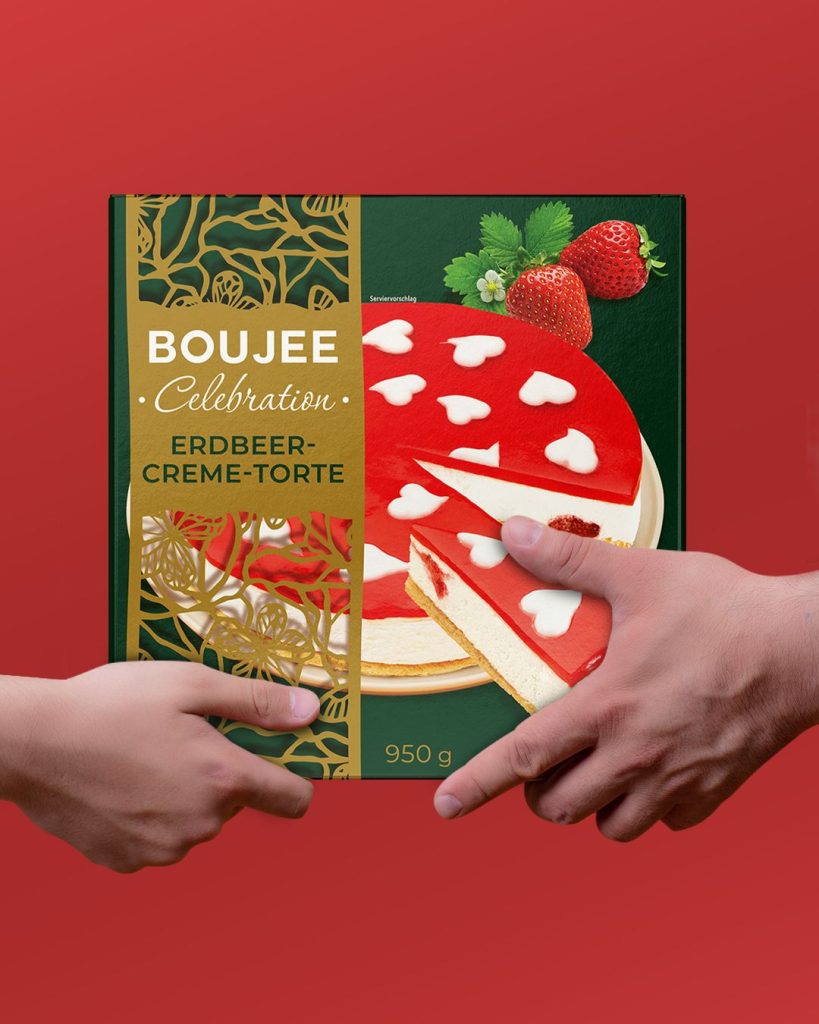
Product packaging design: how a frozen cake sells the emotion of a holiday!
When a frozen cake sells not the taste, but the upcoming evening?
With frozen desserts, things are a bit tougher than they seem at the first brief meeting.
A person hasn’t tasted the cake yet. Doesn’t see the cream up close. Doesn’t smell the sponge cake. In the freezer, they see a box, a few seconds of light from the fridge, and a dozen competitors nearby.
At this stage, the packaging either pulls the product out of the general noise or quietly hides it among other boxes.
That is why during the work on Boujee Celebration for the German market, the task was not just decorative. It was necessary to make the frozen cake look like a part of a festive evening even before the purchase.
- Not a “discount dessert”.
- Not “something for tea”.
- But an item that a person will proudly put in front of guests.
And these are very different emotions.
In freezers, products age visually faster.
There is a problem that is rarely talked about outside of production and retail. Freezers kill half the design. The light from above washes out colors. The glass creates glare. Some packages get covered with a light cold haze. If the design is weak, it literally dissolves in the fridge. Because of this, many products in a real store look cheaper than on presentation mockups. Especially desserts.
On a laptop screen, a dark green color can look expensive. In a store, it risks turning into just a dark spot if contrasts, composition, and scale of elements are not maintained.
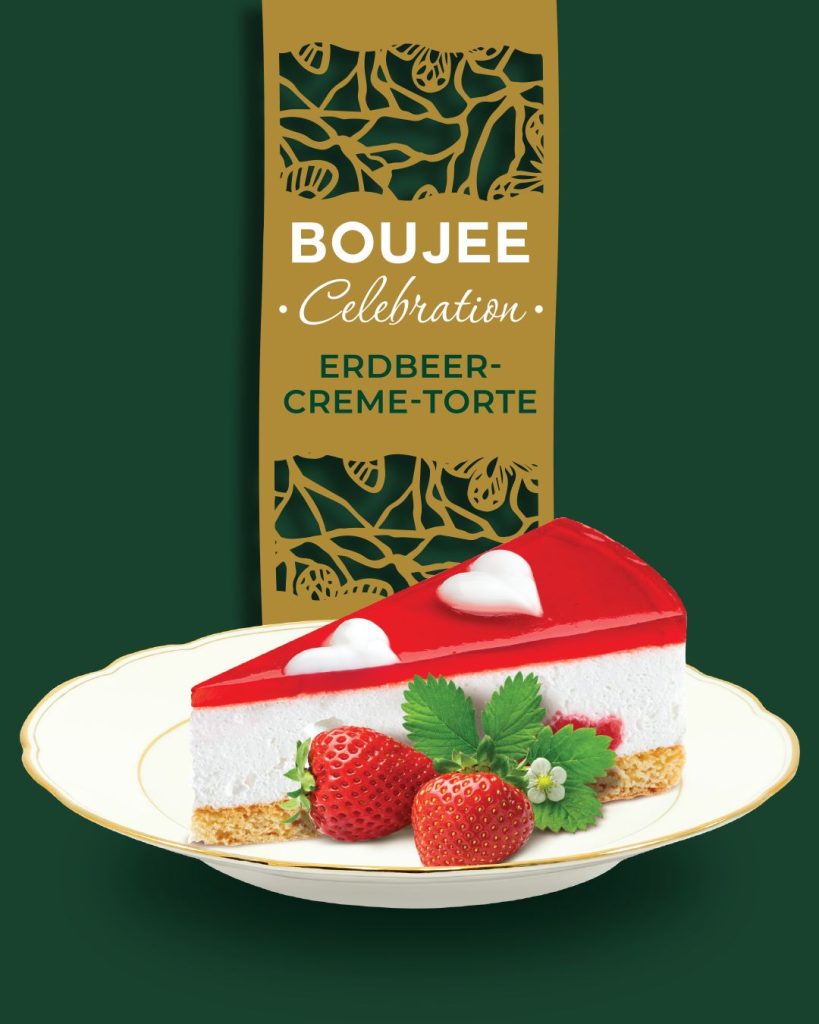
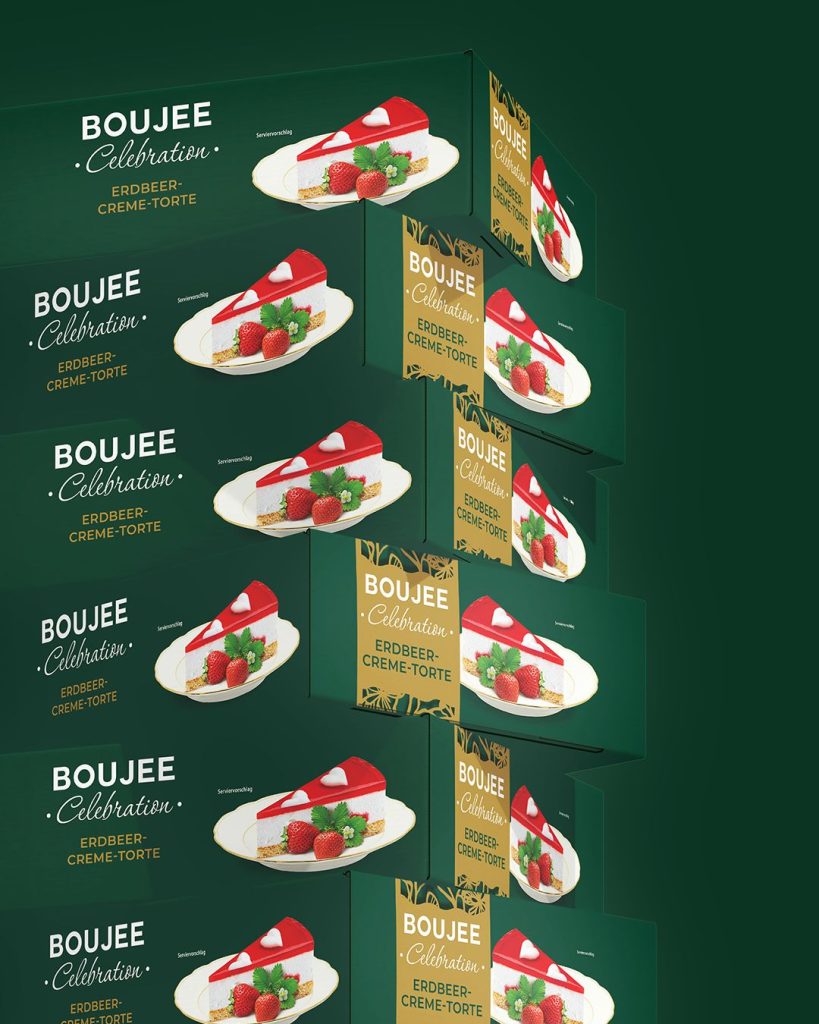
Therefore, in Boujee Celebration, large photos of cakes didn’t just “decorate” the packaging. They perform a utilitarian function. The cream, layers, texture, and glaze must be readable even through the cold freezer glass.
In real retail, no one stares at a design for two minutes. Everything works much rougher there.
The premium segment easily slides into visual pretentiousness
This is one of the most unpleasant traps; when a brand wants to look more expensive, designers sometimes start suffocating the product with “elitism.” A lot of gold, a lot of dark colors, minimal emotion, minimal food on the packaging. At some point, the cake starts looking like it contains a watch box inside. For desserts, this is a dangerous story. Appetite doesn’t like cold distance.
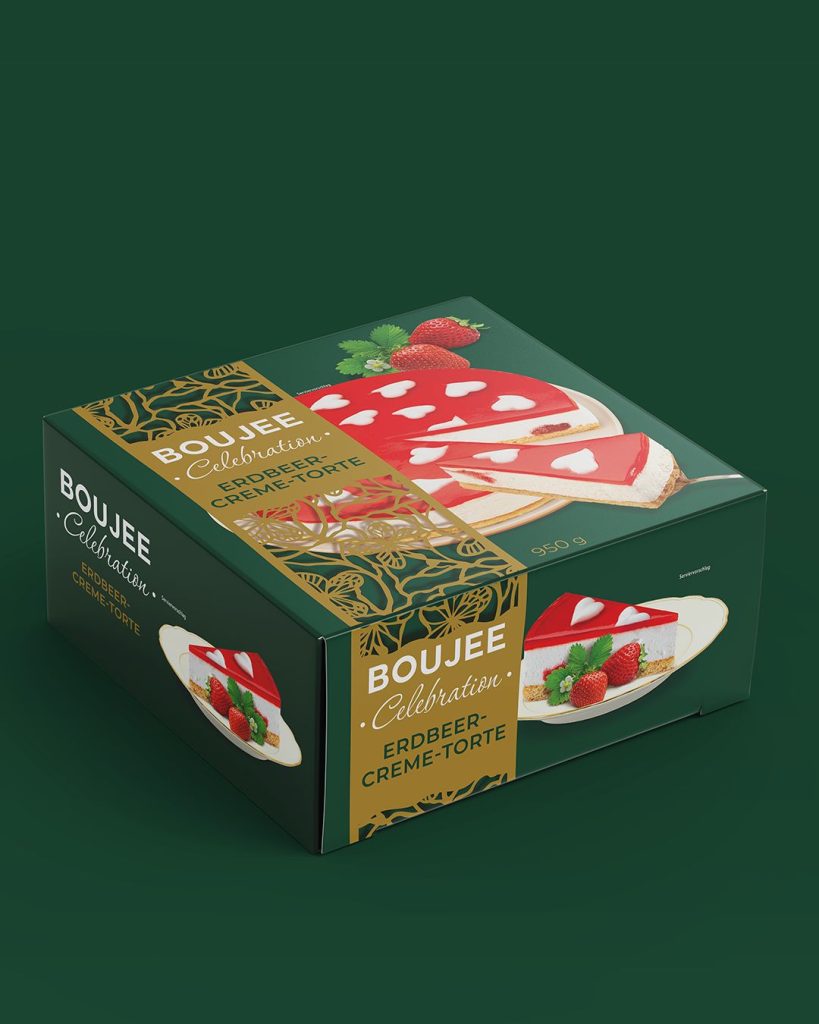
In Boujee Celebration, the premium feel is based not on pretentiousness, but on atmosphere. The dark green background provides depth. Gold elements create a festive mood. Product photos remain the main accent. And this is important. Because a person buys a cake with their eyes much earlier than they read the ingredients list.
Dessert packaging sometimes works as a promise of a “good evening”
This is no longer about graphics. It’s more about how people behave in a store. Some dessert purchases happen very emotionally. A person runs in after work, remembers about guests, grabs a bottle of wine, something for the table, and looks for a cake that won’t look random.
This is where packaging starts selling not the product, but confidence. Not necessarily an expensive one. Not always a rational one. Just the feeling that the evening won’t look cheap.
When working on premium desserts, this has to be taken into account constantly. Otherwise, a strange situation occurs where there is a good product inside, but outside it looks like a compromise. Such things hit repeat purchases very hard.
The request to “order packaging design” almost always comes too late. And this is practically a classic. First, the brand deals with production. Then logistics. Then finding suppliers. Next come retail chains, documents, certification, printing, deadlines. Design is remembered closer to the finale, when there is disastrously little time left before the launch.
That’s when weird phrasing begins:
- “We need to make it look more expensive.”
- “We want to look like a European brand.”
- “Can we just add gold?”
And here begins the most interesting part. Because the problem is almost never the gold.
The problem is that the product packaging lacks character.
Boujee Celebration was built exactly around this. The product line must behave as a single system, but each cake must have its own mood within this system. Otherwise, the shelves start looking like a warehouse of identical boxes.
Minimalism in food sometimes works against sales.
In recent years, many brands try to create “clean” design. Fewer details, more negative space, subdued colors. For cosmetics or electronics, this often works perfectly. Frozen desserts live by different rules. Here, people want to see food. Normal, juicy, vibrant food. Sometimes even slightly exaggeratedly appetizing. Because if the packaging looks too sterile, the brain starts to doubt the product itself.
In the ice cream and dessert segment, this is especially noticeable. Some “trendy” redesigns end up looking beautiful on Instagram but get lost in a real store.
And the store, unfortunately for a designer’s ego, is still more important than Behance.
Retail gives no second chances.
There is one thing that brands understand well after a few failed launches. The buyer almost never stands by the freezer analyzing the product deeply. They don’t read the brand story. They don’t think about complex positioning strategy. They don’t evaluate the visual identity concept. They look for about three seconds. Maybe four.
That is why packaging design development for retail is so heavily tied to quick reactions. Contrast. Photo. Readability. Atmosphere. Recognizability.
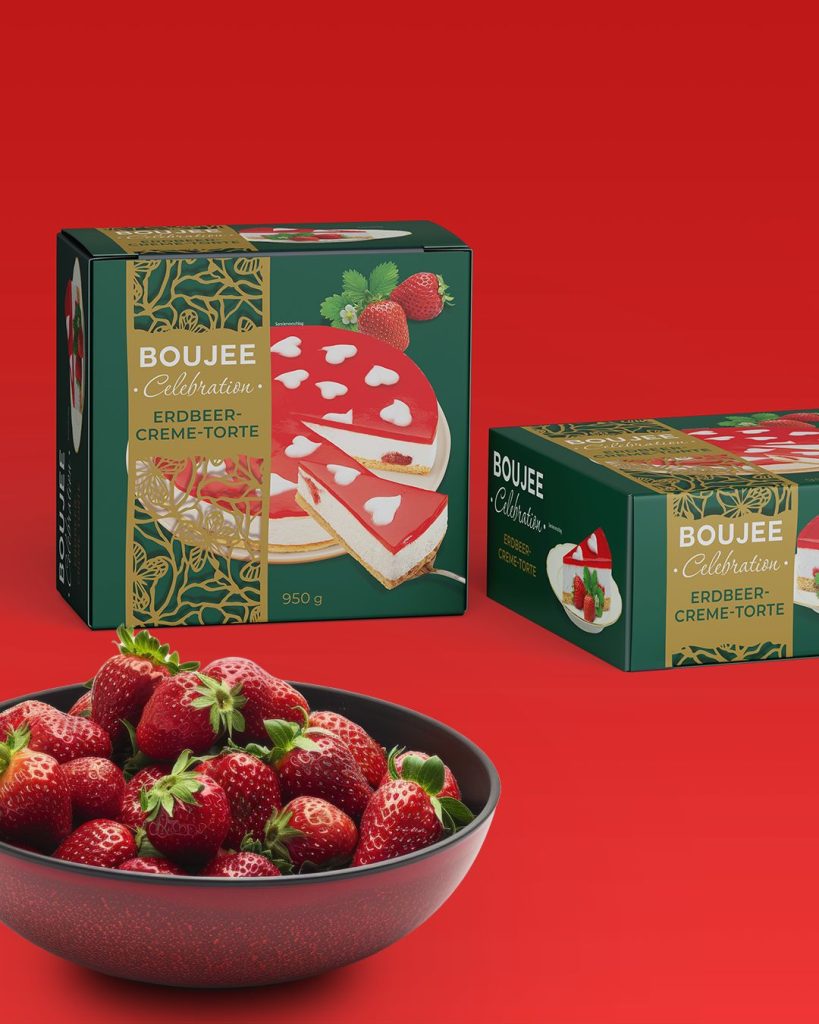
In Boujee Celebration, this is clearly visible even in the details. The large desserts in the photos take up enough space. The names read quickly. The colors do not clash with each other. The packaging looks expensive, but not arrogant.
And this is harder than it seems.
Because sometimes one wrong font is enough to make a premium product suddenly look like a promotional item from the bottom shelf.
Why “expensive” and “tasty” don’t always get along?
This is an interesting problem specific to the dessert category.
When a brand tries too hard to look premium, the product can lose its emotional warmth. The packaging becomes beautiful but cold. Almost museum-like. And a dessert shouldn’t evoke a sense of distance. It should provoke the desire to eat it even before opening the box. That’s why in Boujee Celebration, they kept a lot of emotional food in the frame. Cream. Texture. Layers. Glaze shine. This is no accident and not “just an appetizing photo.” In product design, such things work almost on an instinctual level.
Sometimes people don’t buy a cake!
Sometimes people buy a nice evening after a hard week. Or a dessert for guests they haven’t seen in half a year. Or a box that they are not ashamed to put on the table when there is chaos at home, kids running around the apartment, and there is no time left to cook something from scratch. That is why packaging design in such categories has long ceased to be just a label. It works as an emotional preparation for a moment that hasn’t even begun yet. And when this works right, a person reaches for the box even before they have time to rationally explain to themselves why.

